Donate to Flood Relief
Emergency Response · North-Central Nepal

When the mountains
gave way, Nepal needs us again.

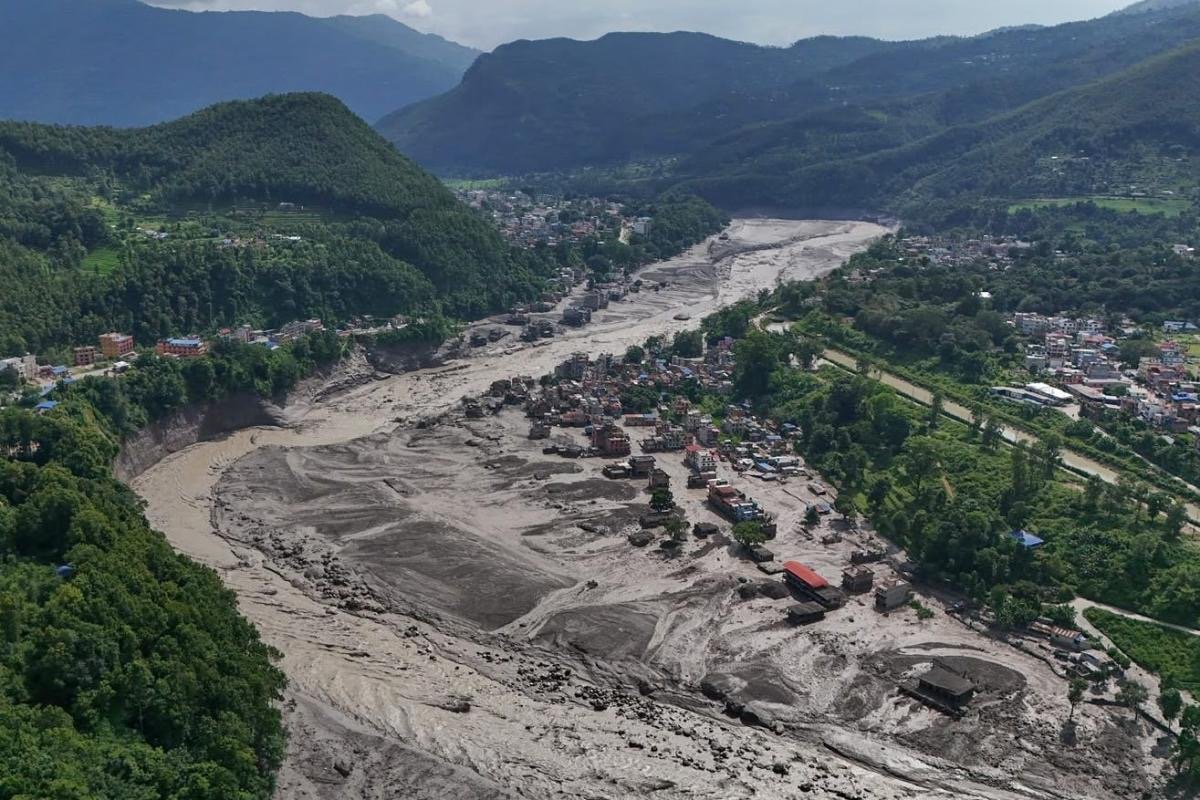
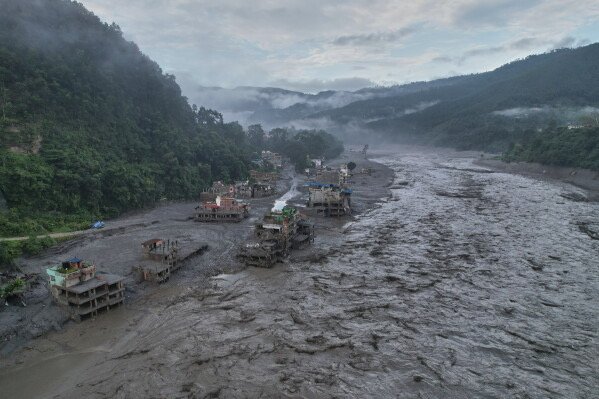
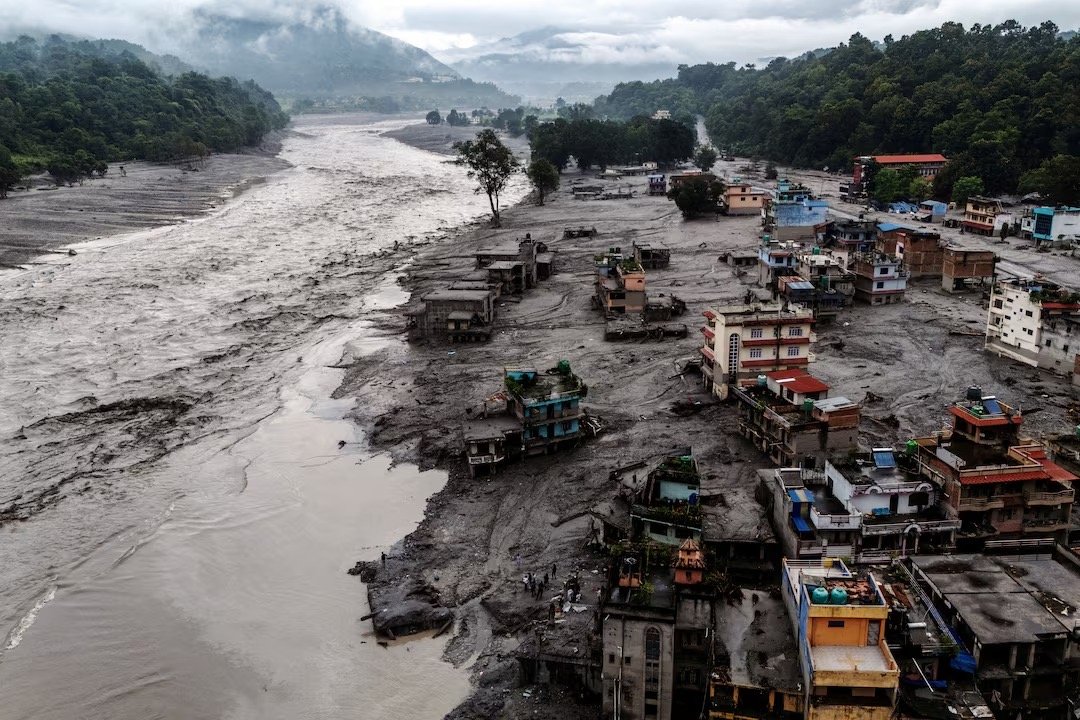
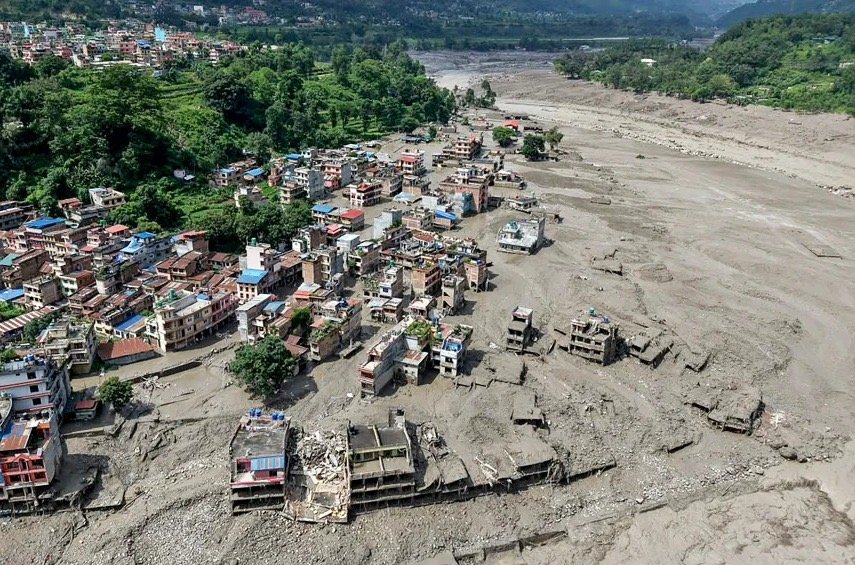
On August 26, 2026, a glacial collapse on the Nepal–Tibet border sent a wall of ice, rock and water through Rasuwa, Nuwakot and Dhading — the same communities still rebuilding from the 2015 earthquake. Bridges, hydropower plants and entire villages were swept away in minutes.

616+
Confirmed deaths
~2,500
Still unaccounted for
2,300+
Injured and in treatment
18
Schools destroyed outright
Figures per Nepal Police & UNICEF, updated August 28, 2026 — will rise as search efforts continue
Snow-covered path and Himalayan peaks seen from Buddha Mandir, Rasuwa District, Nepal
Rasuwa District, Nepal — the terrain now facing months of rebuilding. Photo: Saroj Pandey, Wikimedia Commons, CC BY-SA
What Happened

A wall of ice and rock, moving like wet concrete

Scientists believe a chunk of glacier broke away above the Bhotekoshi/Rasuwa river system, releasing a debris flood equivalent to hundreds of thousands of dump-truck loads of rock and ice. It cut the only overland trade route between Kathmandu and Tibet, damaged 14 hydropower and solar installations, and left phone networks — and entire settlements — dark and disconnected for days.

Rasuwa, one of the districts hit hardest, was still recovering from the 2015 earthquake when this flood struck. For families there, this is the second time in a decade they have had to start over.

River running through Rasuwa District, Nepal, before the flood
A river in Rasuwa District — the same river systems now swollen with glacial debris. Wikimedia Commons, CC BY-SA
“A whole village seems to have been washed away.” — Nepali health official, on the scale of destruction in the flood zone
Why We're the Ones to Call

A promise carried forward, in George's name

The village of Sherpagaun, Briddhim, in Rasuwa District, Nepal
George Basch
Founder, Himalayan Stove Project · 1937–2025

George first came to Nepal in 2001 supporting an Everest expedition, and spent the next two decades bringing clean-burning cookstoves to thousands of Himalayan households. When the 2015 earthquake struck, he mobilized HSP's donor community — people like you — to get tarps and emergency supplies to families who needed them most.

Sherpagaun village, Briddhim, Rasuwa District — the kind of community HSP and Gorkha Foundation have long worked alongside. Wikimedia Commons, CC BY-SA

Friends who worked alongside George for years have stayed close to Nepal — through the Gorkha Foundation's ongoing school-building work, and through Jai, HSP's longtime logistics lead in Kathmandu, whose family became George's extended family. While planning a lasting memorial for George, this same group began asking a harder question: how do we help Nepal right now, the way George would have?

This page — and this campaign — is our answer.

Our Response

Immediate relief, and the support that comes after the cameras leave

Emergency supplies save lives in the first days. Mental health support is what lets survivors rebuild their lives in the months and years after — and it is almost always the first thing to go underfunded.

Immediate Relief

UNDERWAY NOW
  • Solar lights and generators being distributed to flood-affected communities
  • HSP's Kathmandu team checking remaining stove inventory for households that lost everything
  • Coordinating with on-the-ground partners to reach cut-off villages as roads reopen

Long-Term Healing

MENTAL & EMOTIONAL SUPPORT
  • Deploying our "After Disaster" manual, developed with communities after the 2015 earthquake
  • Partnering with Kanti Hospital's mental health department in Kathmandu
  • Connecting survivors to mental health professionals through the International Development Institute (IDI)
Working Alongside
Gorkha Foundation
Himalayan Stove Project
Kanti Children's Hospital
International Development Institute
Local Nepal relief partners